Discover how to seamlessly transition between scuba diving agencies with our comprehensive guide on Equivalent Diving Qualifications. Explore the crossover opportunities between PADI, CMAS, BSAC, NAUI, NASE, SSI, IANTD, ANDI, GUE, IADS, PSAI, SAA, and more. Dive into the world of Equivalent Diving Qualifications provided by Diving In Hurghada, and unlock endless underwater adventures.
Equivalent Diving Qualifications from Different Agencies
Scuba diving is a thrilling and adventurous activity loved by many people around the world. Whether you are a seasoned diver or a beginner looking to explore the wonders of the underwater world, it is essential to have the right qualifications. However, with so many different diving agencies offering certifications, it can sometimes be confusing to understand which qualifications are equivalent across these organizations. In this article, we will explore the equivalent diving qualifications from various agencies to help you navigate through the diving certification maze.
PADI (Professional Association of Diving Instructors)
PADI is one of the most recognized scuba diving agencies globally, offering certifications at various levels. If you hold a specific PADI certification, you might be wondering how it equates to other diving agencies’ qualifications. Let’s take a closer look at the equivalent certifications:
- CMAS (World Underwater Federation): For PADI Open Water Diver certification, the equivalent qualification in CMAS is the CMAS One Star Diver certification. Similarly, the PADI Advanced Open Water Diver certification is recognized as a CMAS Two Star Diver qualification.
- BSAC (British Sub-Aqua Club): PADI Open Water Diver certification is comparable to BSAC Ocean Diver certification. If you possess a PADI Advanced Open Water Diver certification, it is recognized as BSAC Sports Diver qualification.
- NAUI (National Association of Underwater Instructors): PADI Open Water Diver certification is considered equivalent to NAUI Scuba Diver certification. Additionally, PADI Advanced Open Water Diver certification can be seen as NAUI Advanced Scuba Diver qualification.
- SSI (Scuba Schools International): PADI Open Water Diver certification aligns with SSI Open Water Diver qualification. Similarly, the PADI Advanced Open Water Diver certification correlates with SSI Advanced Adventurer certification.
Other Diving Agencies and Their Equivalent Certifications
Apart from the agencies mentioned above, there are many other diving organizations that offer certifications. Let’s discover the equivalent qualifications for the following agencies:
NASE (National Academy of Scuba Educators):
NASE and PADI’s certifications have a high degree of similarity. For instance, PADI Open Water Diver certification can be considered equivalent to NASE Open Water Diver certification.
IANTD (International Association of Nitrox and Technical Divers):
PADI Advanced Open Water Diver certification aligns with IANTD Advanced EANx Diver qualification. If you possess a PADI Rescue Diver certification, it is recognized as IANTD Rescue Diver qualification.
ANDI (American Nitrox Divers International): PADI Advanced Open Water Diver certification is comparable to ANDI Level II certification. Moreover, the PADI Rescue Diver certification equates to ANDI Level III certification.
GUE (Global Underwater Explorers):
PADI Advanced Open Water Diver certification is considered equivalent to GUE Recreational Diver certification. Similarly, PADI Rescue Diver certification is seen as GUE Technical Diver certification.
IADS (International Association of Diving Schools):
PADI Open Water Diver certification aligns with IADS Diver 2-Star qualification. Additionally, PADI Rescue Diver certification can be equated to IADS Diver 4-Star qualification.
PSAI (Professional Scuba Association International):
PADI Advanced Open Water Diver certification is comparable to PSAI Advanced Open Water qualification. Moreover, the PADI Rescue Diver certification equates to PSAI Rescue Diver qualification.
SAA (Sub-Aqua Association):
PADI Advanced Open Water Diver certification is considered equivalent to SAA Advanced Diver qualification. Similarly, the PADI Rescue Diver certification is seen as SAA Dive Leader qualification.
It is important to note that while many diving agencies have equivalent qualifications, there might still be certain variations in terms of course content, emphasis, and practical skills taught during the certification process. Therefore, it is always advisable to seek guidance from diving professionals or instructors who are well-versed in multiple agency certifications to ensure a smooth crossover between organizations.
In conclusion, understanding the equivalent diving qualifications from different agencies is crucial for divers who wish to explore various diving destinations and engage with different diving communities worldwide. By having a clear understanding of these equivalencies, it becomes easier to plan diving trips and advance your diving skills without any confusion. So, go ahead, choose the diving agency and certification that suits you the best, and dive into the marvelous underwater world with confidence!
[!NOTE]
Please consult with your local diving agency or instructor for the most accurate and up-to-date information regarding diving certifications and their equivalencies.
Unraveling the Mystery: Understanding Equivalent Diving Qualifications from Different Diving Organizations
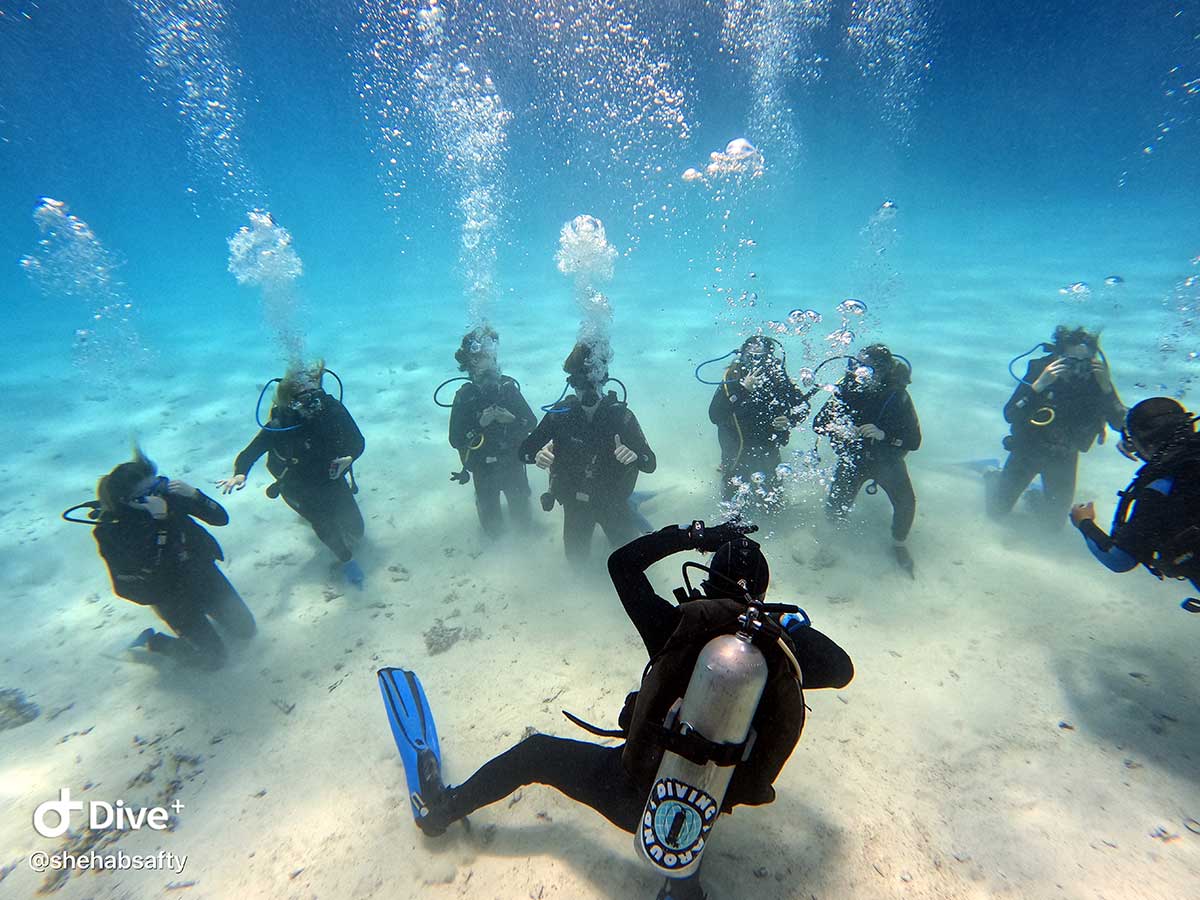
Diving is a thrilling and adventurous activity that allows us to explore the wonders of the underwater world. Whether you are a seasoned diver or just starting your diving journey, understanding the concept of equivalent diving qualifications is crucial. Equivalent diving qualifications refer to the certification levels provided by different diving organizations, which are recognized as being equivalent in terms of skills and knowledge. In this article, we will delve into the importance of understanding equivalent diving qualifications and how they can impact your diving experiences.
Equivalent Diving Qualifications: Crossing over from different SCUBA Diving Organizations
Two of the more demanding training organizations, BSAC and CMAS certifications, are used as benchmarks in the chart.
| Dive Agency | Diving Qualifications | |||||
|---|---|---|---|---|---|---|
| BSAC | Ocean Diver 20 m (BS EN 14153-2, ISO 24801-2) |
Sports Diver 20 m (35 m after progress dives) |
Dive Leader 50 m (BS EN 14153-3, ISO 24801-3) Note, BSAC consider CMAS 3* to be equivalent to Dive Leader but CMAS consider Dive Leader to be equivalent to CMAS 2* |
Advanced Diver 50 m |
1st Class Diver | |
| CMAS | 1 Star 20 m |
2 Star 30 m or 40 m with appropriate experience |
3 Star 56 m |
4 Star | ||
| EN/ISO Standard | EN/ISO 24801-2:2014 Diver level 2, Autonomous Diver |
EN/ISO 24801-3:2014 Diver level 3, Autonomous Dive Leader |
||||
| PADI | Open Water Diver 18 m (12 m if under 12) |
Advanced Open Water Diver 30 m |
AOWD + Rescue Diver | Master Diver / Divemaster | ||
| NAUI | Scuba Diver 18 m |
Advanced Scuba Diver 40 m |
Scuba Rescue Diver / Master Scuba Diver | Divemaster1 | ||
| SAA | Open Water Diver 20 m |
Open Water Diver 20 m |
Club Diver 35 m |
Dive Leader 50 m |
Dive Supervisor 1 | SAA National Diver |
| SSI | Open Water Diver 18 m |
Advanced Adventurer Diver 30m |
Dive Guide EN/ISO 24801-3:2014 |
Dive Guide with Science of Diving = Dive Master | ||
| NASDS | Open Water Diver | Advanced Open Water Diver | AOWD plus Rescue Diver | Dive Supervisor / Master Diver | ||
| SDI | Open Water Diver 18 m |
SDI Advanced Adventure | Advanced + Rescue Diver | Divemaster | ||
| SSAC (ScotSAC) | Sports Diver 30 m |
Master Diver 40 m |
Second Class Diver / Master Diver 1 | |||
| Royal Navy | Ships Diver | |||||
| ITDA | Open Water Diver | ITDA Rescue Diver | Technical Nitrox Diver | Extended Range Nitrox Diver (Ntech) | ||
| ANDI | Open Water Diver | Rescue Diver | Divemaster | |||
| GUE | Recreational Diver 1 | Recreational Diver 2 | Most other GUE qualifications | |||
| IANTD | Open Water Diver 21 m |
Essentials Diver | Advanced Open Water Diver 30 m |
Rescue Diver | Divemaster | |
| DMT NASE UK | Open Water Diver 20 m |
Advanced Open Water Diver 30 m |
Rescue Diver | Advanced Rescue Diver | Divemaster | |
| PSAI | Open Water Sport Diver 18 m |
Advanced Open Water Diver 27 m with 5 specialities2 |
R.A.P.I.D. Master Diver 27 m3 |
Advanced Deep Air Level 1 | Divemaster 40 m |
|
| LA Co UW | Basic Certification | Intermediate Certification | Advanced Certification | |||
| PDIC | Open Water | Advanced Open Water Diver | ||||
| IADS | 1 Star Open Water Diver 20 m |
2 Star Advanced Diver 32 m |
Intermediate Certification | Advanced Certification | ||
| IDD | Open Water Diver 20 m |
Advanced Open Water Diver 32 m |
||||
| FEDAS | Buceador 1 Estrella | Buceador 1 Estrella | Buceador 2 Estrellas | Buceador 2 Estrellas | Buceador 3 Estrellas | |
| HSE | HSE SCUBA Diver (BSAC Ocean Diver) | HSE SCUBA Diver (other agencies), BSAC: other HSE Divers | ||||
| RAID | Open Water 20 m |
Explorer 30 m |
Rescue Diver | Divemaster | ||
| ACUC | Open Water (ISO 24801-2) |
Advanced Open Water | Advanced Open Water with Rescue Diver | Divemaster (ISO 24801-3) |
||
| SNSI | Divemaster | |||||
| IDEA | Open Water Diver | Divemaster | ||||
| ESA | Open Water Diver | Advanced Diver | Diveleader | |||
| PSS Worldwide | Open Water Diver 18 m |
Advanced Open Water Diver 30 m (40 m with Deep Diver course) |
SCUBA Rescue Diver | |||
| NASE | Open Water Diver | Advanced Open Water Diver 30 m (40 m with Deep Diver course) |
AOWD + Rescue Diver | Master Diver | ||
| IDIC | Open Water Diver | Advanced Open Water Diver 40 m with Deep Diver |
AOWD + Rescue Diver | Dive Supervisor | ||
| UTD | Open Water Diver 18 m |
Recreational 1 (a more robust entry level class than their Open Water Diver) 18 m |
Recreational – Advanced (teaches nitrox as standard) 30 m |
Master Diver (teaches heliox as standard) 39 m |
||
| PTRD | 1 Star Diver 25 m |
2 Star Diver 40 m |
3 Star Diver 50 m |
3 Star / 4 Star Diver 50 m |
||
| NDL | Diver | Dive Master | ||||
| DIWA | Open Water Diver | Advanced Open Water Diver | Master Diver | Diveleader | Divemaster | |
| A.D.I.P. | Autonomous diver (EU14153-2) | Dive guide (EU14153-3) | ||||
| AUSI | Level 1 | Level 2 | Level 3 | Level 4 | ||
| SEI | Open Water Diver | Advanced Open Water Diver | Advanced Plus Diver | Master Diver with DRAM Rescue Diver | ||
Notes
As a general rule, if you have the necessary diving experience and a qualification from one agency, you can enroll in the next course up equal from another agency. Refer to the list of sources below for further details on certain organizations.
Instructor Grades
| Dive Agency | Instructor Qualifications | |||||
|---|---|---|---|---|---|---|
| CMAS | 1 Star Instructor | 2 Star Instructor | 3 Star Instructor | 4 Star | ||
| BSAC | Theory Instructor / Practical Instructor | Open Water Instructor | Advanced Instructor | National Instructor | ||
| PADI | Assistant Instructor | Open Water Scuba Instructor (OWSI) | Master Scuba Diver Trainer (MSDT) | Instructor Development Course (IDC) Staff Instructor Master Instructor |
||
| EN/ISO Standard | EN 14413-1 / ISO 24802-1 | EN 14413-2 / ISO 24802-2 | ||||
| NAUI | Scuba Instructor | Instructor Trainer | Course Director | |||
| SAA | Club Instructor | Open Water Instructor | Regional Instructor | National Instructor | ||
| SSI | Assistant Instructor | Open Water Instructor | ||||
| SSAC (ScotSAC) | Branch Instructor | Regional Instructor | Club Examiner | |||
| LA Co UW | UICC (underwater instructors certification course) | |||||
| IADS | UICC (underwater instructors certification course) | |||||
| ITDA | ITDA Open Water Instructor | ITDA Sport Instructor | ITDA Course Director | |||
| FEDAS | Instructor 1 Estrella | Instructor 2 Estrella | Instructor 3 Estrella | |||
| ACUC | Entry Level Instructor, Assistant Instructor | Open Water Instructor with 140 dives | Open Water Instructor with additional courses | |||
| SNSI | Open Water Instructor | DM Instructor | ||||
| SDI | Assistant Instructor | Open Water Scuba Diver Instructor | Course Director | Instructor Trainer | ||
| PTRD | 1 Assistant Instructor | 1 Star Scuba Instructor | ||||
| DIWA | Assistant Instructor | Speciality Instructor | Master Scuba Instructor | Instructor Trainer / Course Director | ||
Crossing Over Qualifications
There are other training organizations and credentials, thus the tables above are by no means comprehensive. You might be required to begin training at a lower level than your comparable certification if you intend to cross-over. Consult the advise of your new agency.
Why Understanding Equivalent Diving Qualifications is Important
The diving community is diverse, with numerous diving organizations worldwide offering their own certification programs. Each organization has its own set of requirements and standards for certification, leading to the existence of equivalent qualifications. Understanding these equivalencies is important for several reasons. Firstly, it allows divers to easily transition between different diving organizations without the need for additional training or certification. This flexibility ensures that divers can continue their diving adventures no matter where they are in the world. Secondly, understanding equivalent diving qualifications promotes safety in the diving community. Divers with equivalent qualifications have undergone similar training and possess comparable skills, reducing the risk of misunderstandings and miscommunication underwater.
Common Diving Organizations and Their Qualifications
To navigate through the world of diving equivalent qualifications, it is essential to familiarize yourself with the common diving organizations and their respective certifications. Some of the well-known organizations include the Professional Association of Diving Instructors (PADI), the National Association of Underwater Instructors (NAUI), and the Scuba Schools International (SSI). These organizations offer a range of certifications from entry-level to advanced levels, catering to divers of all skill levels. Each certification level corresponds to specific diving skills and knowledge requirements, ensuring that divers are competent and safe underwater. It is important to note that while the names of the certifications may vary between organizations, the equivalent levels indicate a similar level of expertise.
How to Navigate Through Different Diving Qualifications
Navigating through different diving qualifications can be daunting, but with the right approach, it can be a seamless process. Firstly, research and gather information about the specific diving organization and its certifications. Understanding the organization’s training methodologies, curriculum, and assessment criteria will provide insights into the equivalent qualifications. Secondly, consult with experienced divers or dive instructors who have knowledge of multiple diving organizations. They can provide guidance and clarity on the equivalencies between different certifications. Lastly, consider cross-certification courses offered by some diving organizations. These courses bridge the gap between certifications, allowing divers to obtain equivalent qualifications without the need for additional training.
Challenges of Diving with Different Qualifications
Diving with divers from different organizations can present certain challenges. One of the main challenges is the difference in diving terminology and procedures. While the skills and knowledge may be equivalent, the terminology used to communicate underwater may vary. This can cause confusion and misunderstanding during dives, potentially compromising safety. Additionally, the procedures and protocols followed by different diving organizations may differ slightly, requiring divers to adapt and understand the nuances of each organization’s practices. However, with effective communication and mutual understanding, these challenges can be overcome, ensuring a safe and enjoyable diving experience for all.
Tips for Diving with Divers from Different Organizations
Diving with divers from different organizations can be a rewarding experience that promotes cultural exchange and learning. To make the most of these encounters, here are some tips to keep in mind. Firstly, establish clear communication before the dive. Discuss the diving procedures, signals, and emergency protocols to ensure everyone is on the same page. Secondly, be open-minded and receptive to different approaches and techniques. Embrace the diversity in diving practices and learn from each other’s experiences. Lastly, practice patience and understanding. Remember that everyone comes from different backgrounds and may have different levels of experience. By fostering a supportive and inclusive environment, diving with divers from different organizations can be a memorable and enriching experience.
Resources for Understanding Diving Equivalent Qualifications
Several resources are available to assist divers in understanding diving equivalent qualifications. Online forums and communities dedicated to diving often have discussions and resources regarding diving organizations and their certifications. These platforms allow divers to connect with others who have experience with different organizations and can provide valuable insights. Additionally, many diving organizations have comprehensive websites that provide detailed information about their certifications and equivalencies. These websites often have comparison charts or documents that clearly outline the equivalent qualifications between organizations. Lastly, reaching out to local dive centers and instructors can also be beneficial, as they have firsthand knowledge of the diving landscape in their region and can provide guidance on equivalent qualifications.
Real-Life Examples of Diving with Different Qualifications
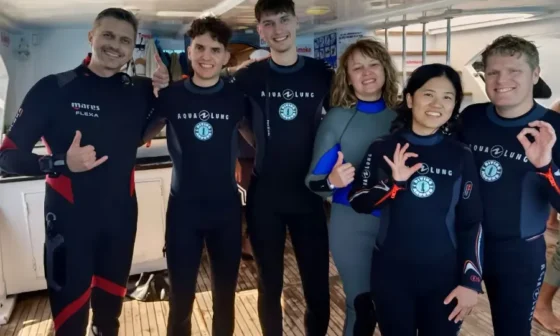
To illustrate the practical implications of diving with different qualifications, let’s consider a scenario. Imagine a group of divers from various diving organizations coming together for a dive trip. Despite having different certifications, the divers are able to communicate effectively and understand the necessary safety protocols. They share their knowledge and experiences, enriching the dive for everyone involved. This scenario highlights the importance of understanding equivalent diving qualifications and how they enable divers to come together and enjoy the underwater world as a united community.
Overcoming Misconceptions about Diving Equivalent Qualifications
Misconceptions and misunderstandings surrounding diving equivalent qualifications can hinder the diving community’s growth and unity. It is crucial to overcome these misconceptions and promote a more inclusive and harmonious environment. One common misconception is that certifications from certain organizations are superior to others. In reality, all reputable diving organizations adhere to strict standards and requirements to ensure safety and competence. Another misconception is that divers with equivalent qualifications have identical skills and knowledge. While the certifications may be equivalent, individual divers may have different levels of experience and expertise. By fostering open dialogue and education, these misconceptions can be addressed, fostering a more supportive and diverse diving community.
Embracing Diversity in the Diving Community
In conclusion, understanding equivalent diving qualifications from different diving organizations is essential for every diver. It allows for seamless transitions between organizations, promotes safety, and encourages a diverse and united diving community. By familiarizing yourself with the common diving organizations and their certifications, navigating through different qualifications becomes easier. Remember to embrace the challenges and opportunities that come with diving with divers from different organizations, as it enriches our diving experiences and broadens our perspectives. Let us celebrate the diversity in the diving community and continue exploring the wonders of the underwater world together.
Dive into the world of equivalent diving qualifications and embrace the diversity in the diving community. Connect with divers from different organizations and share your experiences. Together, let’s explore the depths and create a more inclusive diving community.