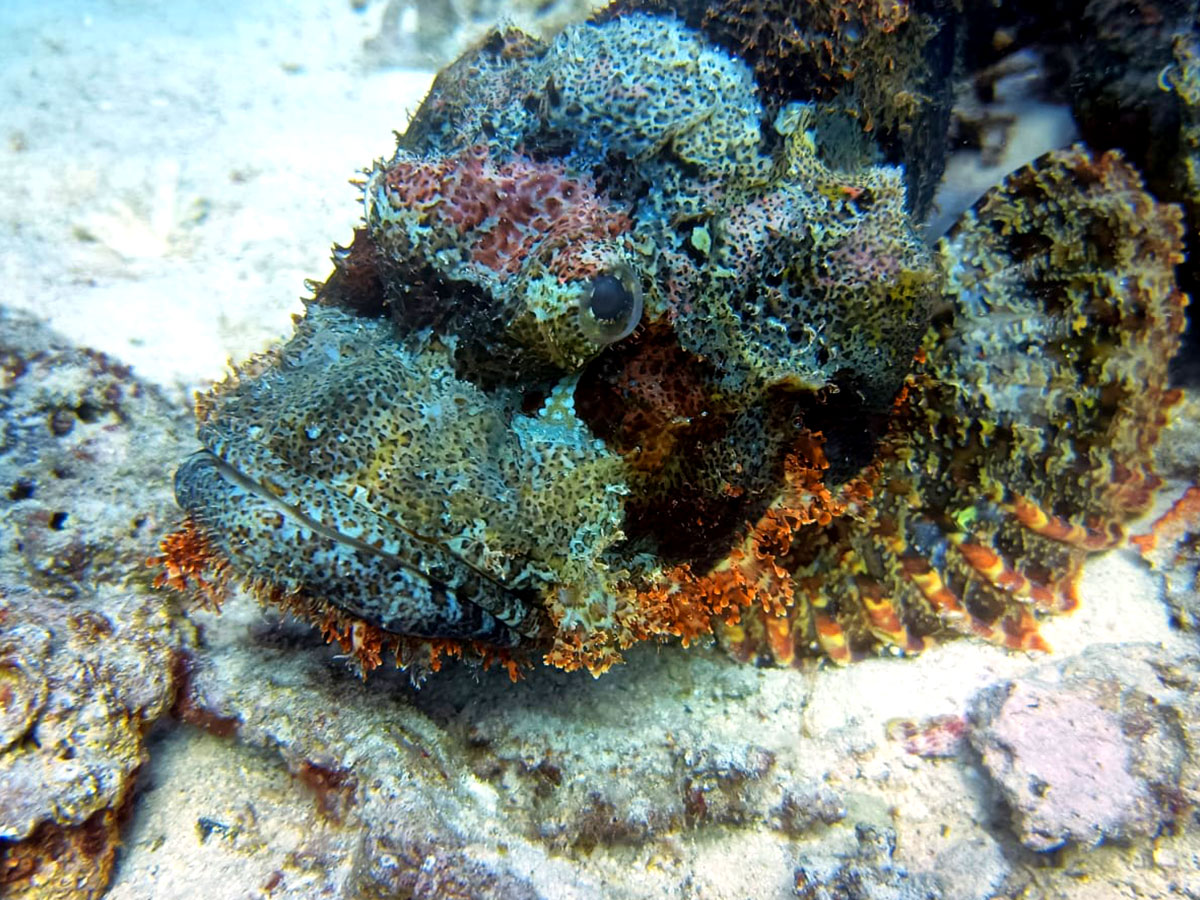
The quickest way to identify red sea fishes underwater isn’t to memorise names. Start by noticing how a fish is shaped, how it moves and where it feeds. Similar colours can be misleading, but a fish’s outline, markings and behaviour give you several clues to compare.
If you’ve spotted a fish and wondered what it was, this guide offers a practical way to look closer. You’ll learn how butterflyfish differ from parrotfish, why sandy patches and coral gardens attract different kinds of life, and what you might notice on a dive around Hurghada.
These examples are identification aids, not a promise of specific sightings. Encounters vary with location and conditions. Take your time, observe without disturbing the reef, and follow your dive professional’s instructions. Good buoyancy and a respectful distance help you enjoy marine life while keeping clear of coral.
Key Takeaways
- Use reef structure as a clue: fish may feed, shelter or move through coral, sand and open water in different ways.
- Compare body shape, markings and swimming style to recognise selected reef fish.
- Identify an unfamiliar fish in a simple sequence: shape, markings, movement and nearby habitat.
- Observe calmly, maintain buoyancy, give marine life space and follow your dive professional’s instructions.
- Choose a few fish to look for, ask questions after sightings and record what you noticed to build your identification skills.
Red Sea fishes: how reef habitats shape the species you may encounter
Red Sea fishes are the many fish species living in and around the region’s marine habitats, not one single group of reef fish. Reefs provide places to shelter, feed and move between. Crevices, coral surfaces, open water and nearby sand each offer different conditions, so a fish’s location can help you narrow down what it might be.
Look beyond colour. Notice the space a fish occupies and what it’s doing there. The examples in this guide can help with identification, but they aren’t a checklist of fish you’re certain to see near Hurghada. Wildlife encounters and conditions vary from dive to dive.
Why coral reefs support varied fish life
Coral formations create small spaces where fish can hide from predators and rest. Their surfaces and surrounding areas also offer feeding opportunities. Branching coral, sheltered gaps and exposed reef edges create different places for fish to use. Some pick food from the reef; others swim above it or stay close to its structure.
Reef fish are part of a wider marine community. Coral is made up of animals, and reefs also support invertebrates such as shrimp. On sandy ground beside a reef, gobies may be found near burrows shared with shrimp. In coral gardens, anthias, damselfish and butterflyfish are examples of fish associated with reef structure. These are general habitat clues, not promises of local sightings.
For a broader reference, explore this comprehensive list of Red Sea reef fish. Use it to learn names, then focus underwater on features you can actually see.
What affects which fish you notice
Depth affects the light and the reef structure in view. Visibility influences how far away you can distinguish a fish, while light can change how clearly its colours and markings appear. Your focus matters too. Scan open water and you may miss a small fish beside coral; concentrate on the reef and you may overlook movement beyond it.
Pause at a comfortable distance and observe one area at a time. Look for movement and shape before deciding what a fish might be. Don’t touch or chase marine life to get closer, and follow your dive professional’s instructions. Patience on a dive around Hurghada can help you notice more without disturbing the reef.
Recognisable Red Sea reef fish: colours, shapes, and standout features
A few clear visual clues are more useful than trying to memorise a long list. Start with patterns and body shape, then check how the fish moves. Colour can help, but light, depth and visibility may change how it looks underwater.
Fish with distinctive colours and patterns
- Red Sea clownfish (Amphiprion bicinctus): Look for an orange body and two broad white bars. It’s a Red Sea species, but that doesn’t guarantee a sighting at any particular reef.
- Masked butterflyfish (Chaetodon semilarvatus): Its bright yellow body and dark band across the eyes make a useful combination to notice. Check the overall pattern as well as the colour.
- Red Sea bannerfish (Heniochus intermedius): Its tall, flattened body and long trailing dorsal fin create a distinctive outline. Compare shape and markings rather than relying on whether it appears pale or dark.
Fish recognised by shape or behaviour
- Parrotfish: A beak-like mouth is the key clue. Parrotfish use it to scrape algae from hard surfaces, so you may see one feeding close to the reef.
- Lionfish: Broad, fanlike pectoral fins and long, prominent spines create a striking silhouette. Observe from a respectful distance and never touch marine life.
- Napoleon wrasse (Cheilinus undulatus): This large wrasse has a robust body, and adults are recognisable by a prominent forehead. Size and shape are more useful clues than trying to judge its colour from a distance.
These examples give you a starting point for observing red sea fishes, but they aren’t a guaranteed Hurghada checklist. Viewing conditions can affect a fish’s appearance, and different species may share colours or markings. Look for more than one feature before settling on an identification. On a guided dive in the area, you can explore guided diving in Hurghada and ask your dive professional about fish you notice.
How to tell similar Red Sea fishes apart underwater
A quick glance may reveal a fish’s colour, but that alone may not be enough to identify it. Use the same sequence each time: body shape, markings, movement, then habitat. Each clue helps narrow the possibilities. Together, they’re more useful than colour alone, which can look different as light and visibility change.
Compare markings and body shape first
Start with the outline. Is the fish deep-bodied and flattened from side to side, long and slender, or broad around the head? Then check for features that are easy to notice, such as stripes, spots, a dark eye band or unusually long fins. Don’t identify a fish from one mark alone, since similar patterns can appear on different species.
Butterflyfish and parrotfish offer a useful family-level comparison. Butterflyfish typically have a flattened, disc-like body and a small pointed mouth. Parrotfish have a more robust shape and a beak-like mouth. These visible differences can help you sort what you’re seeing without claiming certainty about the exact species.
Use movement and habitat as supporting clues
Next, watch how the fish moves and where it spends its time. A butterflyfish may pick at food close to the reef, while a parrotfish can scrape algae from hard surfaces with its beak. Location adds context: a fish beside coral, over open water or near sand may be using that habitat in a different way. Behaviour and habitat don’t prove an identification, but they can help you check whether your first guess fits.
- Shape: Note the body outline and mouth.
- Markings: Look for stripes, spots or contrasting patches.
- Movement: Observe whether it glides, darts, hovers or feeds.
- Setting: Notice whether it’s near coral, sand or open water.
Identification tip: Observe the fish without pursuing it. Let its markings, movement and surroundings provide the clues.
If you’re unsure, remember the details you could see and compare them with a reliable fish guide after the dive. A brief or distant view may only support a family-level guess, and that’s still useful practice. Don’t touch, feed, block or chase fish to get a closer look. Calm observation gives you time to notice more while protecting the marine life you came to see.
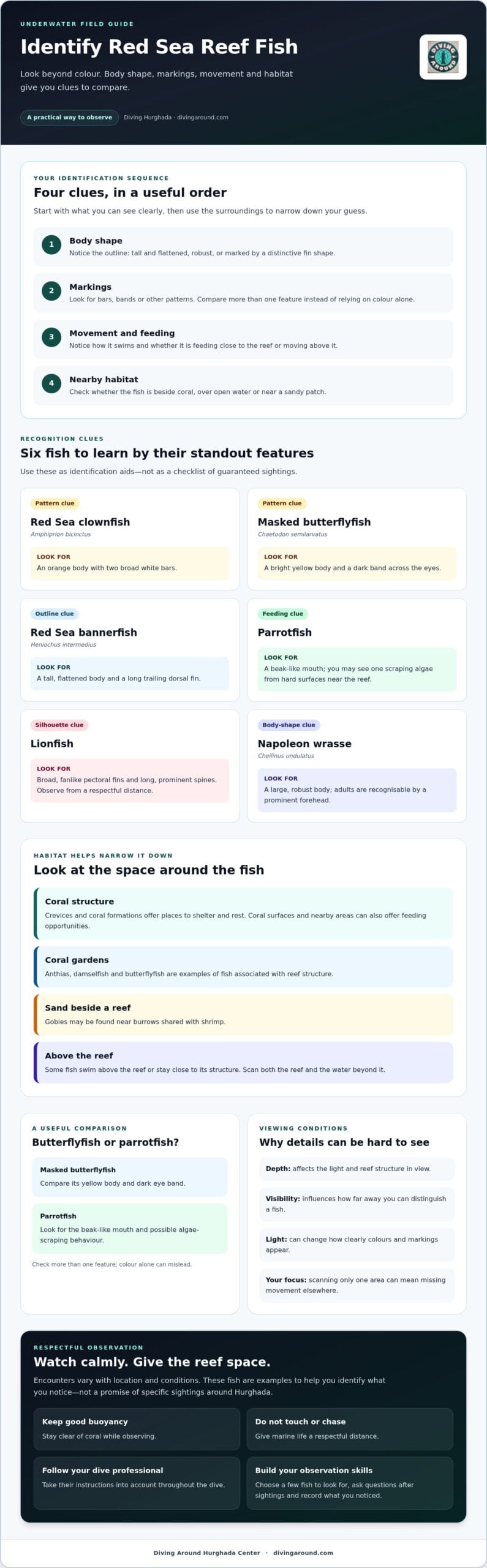
Observing Red Sea fishes responsibly while diving around Hurghada
Responsible fish spotting starts before you move closer. On a reef dive around Hurghada, calm observation gives you time to notice details while helping you avoid unnecessary contact with coral or marine life. Sightings and conditions can differ between outings, so treat each dive as its own experience rather than expecting particular fish.
A simple fish-spotting routine for divers
Pause where you are and scan a small area. Before changing position, follow this sequence:
- Shape: Notice the fish’s outline and size relative to nearby coral.
- Markings: Look for stripes, spots or contrasting patches.
- Movement: Watch how it swims or feeds.
- Setting: Note whether it’s close to coral, over sand or in open water.
Stay at a respectful distance instead of following a fish. If you’re unsure what you’ve seen, remember the visible clues and ask your dive professional when the observation is over. This keeps your attention on the fish without interrupting its movement or the dive.
Protect the reef while watching marine life
Good buoyancy helps keep fins and equipment clear of coral. Don’t stand, kneel or rest on the reef, and avoid touching, feeding, handling or cornering fish for a closer look or photograph. If you need to adjust your position, do so calmly and follow your dive professional’s instructions. These habits let you watch without turning a sighting into a disturbance.
A boat dive can shape what you see, but no itinerary guarantees a particular encounter. For practical information about the broader outing, read the daily diving trips in Hurghada guide. To explore guided diving with Diving Around Hurghada, learn about daily diving in Hurghada.
Turn fish recognition into a relaxed Red Sea diving experience
You don’t need to memorise a long checklist to enjoy spotting red sea fishes. Choose a few to look for and focus on one visible clue for each. This gives your dive a simple point of interest without turning it into a test or distracting you from the dive plan.
Prepare a beginner-friendly fish checklist
Keep your list short. For example, look for the Red Sea clownfish’s two white body bars, the parrotfish’s beak-like mouth and the lionfish’s broad fins and long spines. These are useful starting clues, not guarantees that you’ll see those fish on a particular dive.
A simple sighting log can help you learn after the dive. Record where you noticed the fish in general terms, what it looked like and what it was doing. If you’re uncertain, write down a question instead of treating your first guess as confirmed. Later, compare your notes with a reliable fish guide.
A waterproof slate may suit some divers, but use one only if it fits your training and the conditions. Your first priority is following the dive plan and staying aware of your surroundings. You can also remember a few visual details and make notes once you’re out of the water.
Find local guidance for your next dive
Guided diving can help you focus on marine life while remaining mindful of the dive plan. Ask your dive professional about fish you notice, and follow their instructions on positioning and movement. A guide can support your observation, but no one can promise a particular species encounter. Conditions and sightings vary between outings.
Diving Around Hurghada Center offers guided daily diving in Hurghada. If you’d like to explore your options for a Red Sea dive, you can Explore Diving Around Hurghada Center. Keep your fish list flexible, stay curious and let each observation add to your understanding of the reef.
Take your fish-spotting skills into the Red Sea
Recognising red sea fishes gets easier when you look beyond colour. Compare body shape, markings, movement and habitat, and treat uncertain identifications as clues to check later. Choosing just a few fish to recognise can make a dive more engaging without turning it into a checklist.
Give marine life space, keep clear of coral and follow your dive professional’s instructions. Sightings vary, so focus on observing carefully rather than expecting a particular fish. A patient approach helps you enjoy the reef while respecting the animals that live there.
For a guided introduction to Red Sea diving, Diving Around Hurghada Center offers guided daily diving and Discovery Diving experiences in Hurghada. Explore diving with Diving Around Hurghada Center and take your curiosity about reef life into the water. Every dive offers something new to notice.
Frequently Asked Questions
What fish can you see in the Red Sea?
Red Sea reefs support a varied community of fish, and possible sightings depend on the reef habitat and conditions. Recognisable examples include the Red Sea clownfish, masked butterflyfish, parrotfish and lionfish. These are examples, not a promise that you’ll see a particular species on a dive near Hurghada. Look for clues such as stripes, body shape or fin outline, and check more than one feature before identifying a fish.
Are Red Sea fish dangerous to divers?
Most fish are best observed calmly and left undisturbed, but some have defensive features, such as the lionfish’s venomous spines. Don’t touch, feed, corner or chase fish, and never reach into reef crevices where an animal may be sheltering. Keep a respectful distance and follow your dive professional’s instructions. If you’re unsure how close to get, stay back and observe from where you are.
How can you identify fish while scuba diving?
Start with body shape, then look for markings, movement and the fish’s surroundings. A parrotfish’s beak-like mouth is a useful clue, while a Red Sea clownfish has two broad white bars. Colour can change with light and visibility, so don’t rely on it alone. A quick glance may only support a broad guess. Remember the features you noticed and compare them with a reliable guide after the dive.
Can beginner divers see Red Sea fishes in Hurghada?
Beginners can observe reef fish while diving in Hurghada when the experience is suitable for their training and they follow the dive professional’s guidance. You don’t need to identify every fish to enjoy watching marine life. Take time to notice a few shapes or patterns, and ask questions when appropriate. Sightings vary between dives, so no particular fish encounter can be guaranteed.
Are Red Sea fishes different from fish in other seas?
Yes. The Red Sea has its own mix of marine species, including fish found nowhere else as well as species that occur in other regions. Some fish may be especially characteristic of the Red Sea, while others may look familiar to divers who have explored different seas. For identification, check the fish’s features and regional range rather than assuming a similar-looking fish has the same name.
When is the best time to see fish in the Red Sea?
There isn’t one guaranteed best time to see fish. The species you notice can vary with location, reef habitat, depth, visibility and light, and encounters differ between dives. Rather than planning around promised sightings, ask about the conditions expected for your outing and keep your fish list flexible. Patient observation can help you notice more, whatever fish happen to be present.